




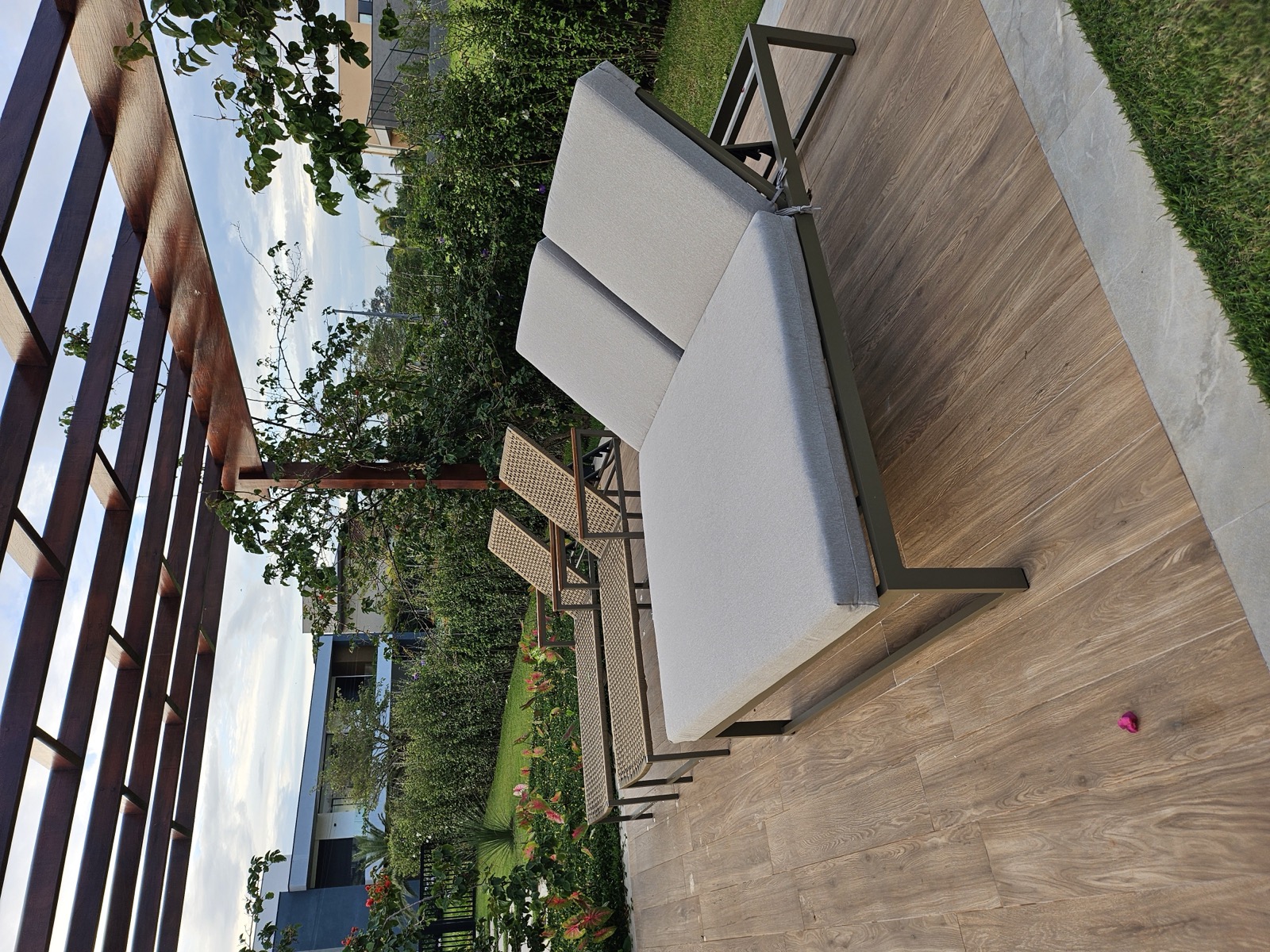
Outdoor furniture is exposed to the sun, rain, and everyday use. The good news is that keeping it beautiful and durable for many years is easier than it seems — as long as you use the right products and respect the specificities of each material. We have put together the complete guide, material by material, in the standard we recommend at Mavie.
What is the golden rule for cleaning any outdoor furniture?
Before entering into each material, there is a principle that applies to all of Mavie's outdoor furniture:
- Periodic cleaning using only soft cloth, neutral soap and water.
- Never use abrasive products or strong chemicals — alcohol, chlorine, ammonia, disinfectants, multipurpose detergents (like Veja), solvents, or steel shavings.
- Let it dry naturally, preferably in the shade.
- Protect or collect the furniture in heavy rain, storms, and long periods of non-use.
Following these four recommendations already prevents most problems — and preserves the original finish.
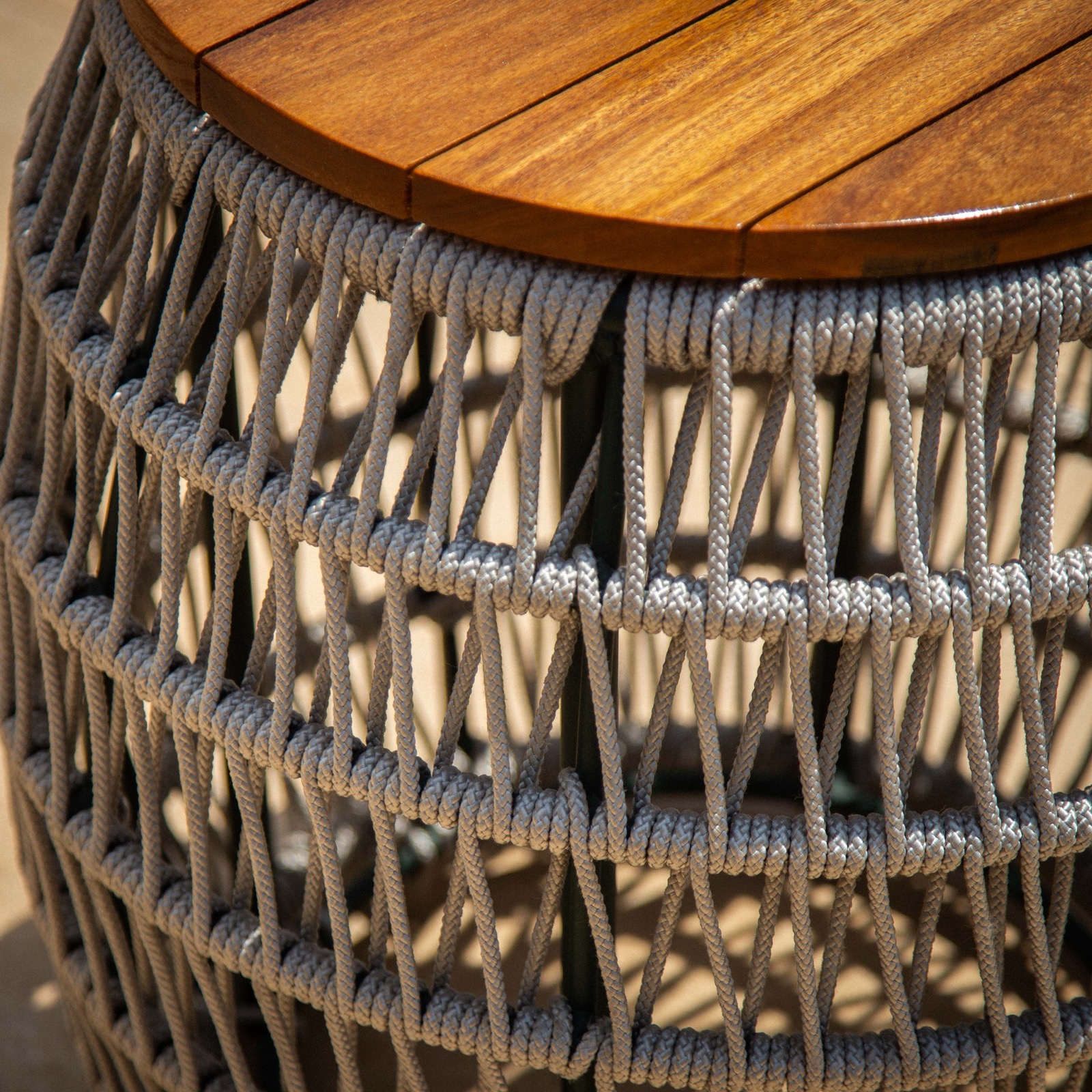
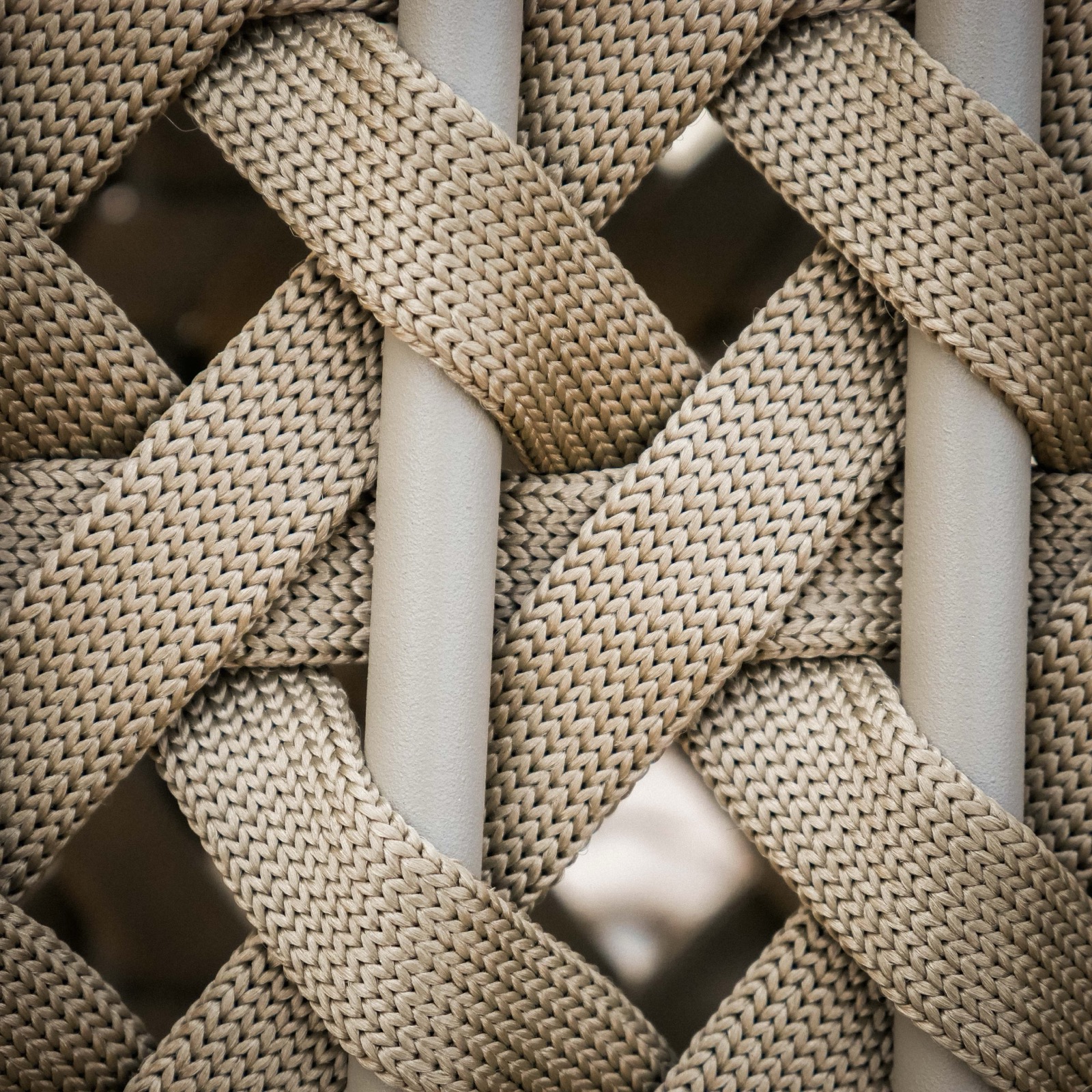
How to clean nautical rope furniture?
The nautical rope is durable and easy to care for, but the weave requires some attention:
- Dilute neutral soap in warm water and apply with a sponge or brush with soft bristles.
- Apply gently, allowing the solution to act for a few minutes in the trays.
- Rinse with little water and let it dry in the shade.
- Avoid direct high-pressure jetting onto the fabric and any abrasive product.
Want to understand the material better? Check out our comprehensive guide on marine rope.
How to care for the aluminum structure?
Aluminum is what gives furniture durability — and requires very little maintenance:
- Clean with water, neutral soap and a soft sponge, preferably every week.
- To enhance the shine, use automotive wax (for shiny paint parts) or liquid silicone (for dark paint).
- Never use alcohol, chlorine, ammonia, or steel wire — they scratch the electrostatic paint.
Our structure receives electrostatic powder painting, This creates a barrier against corrosion. Caring for it properly keeps the part looking new for much longer.
And the fabrics and the cushions?
The cushions from Mavie use fabrics developed for outdoor use — waterproof and with UV protection — which makes cleaning easier:
- Clean with a damp cloth and neutral soap, acting quickly on stains.
- In the tissues Solution Dyed, The color is dyed into the fiber, which makes it much more resistant to the sun and washing.
- Collect the cushions on rainy days and store them dry.
How to preserve the wood (cumaru)?
The cumaru is a noble wood that is naturally resistant to the elements:
- Clean with a damp cloth and neutral soap, without soaking.
- To maintain the warm tone of the wood, periodically hydrate it with wood oil.
- Avoid abrasives and the accumulation of water on the surface.
Synthetic fiber, sling fabric and foam require different care?
Not very much — everyone follows the same simple logic:
- Synthetic fiber and sling fabric: water, neutral soap and a soft bristle brush; let it dry well.
- Formica tops (HPL): A damp cloth with neutral soap. It is a surface resistant to heat and scratches, and very easy to clean — just avoid abrasive sponges.
Summary: how to clean each material
Keep this table handy for reference when cleaning:
| Material | How to clean | Avoid | Extra tip |
|---|---|---|---|
| Aluminum (structure) | Water + neutral soap, weekly | Alcohol, chlorine, ammonia, steel shavings | Automotive wax (glossy) or silicone (matte) for highlighting |
| Marine ropes and tapes | Soft brush + diluted neutral soap | High-pressure jet, abrasive | Dry in the shade |
| Fabrics and cushions | Wet cloth + neutral soap | Strong chemicals | Act quickly on stains; collect in the rain |
| Madeira (cumaru) | Wet cloth + neutral soap | Soaking, abrasives | Moisturize with oil to maintain the color |
| Synthetic fiber / sling fabric | Water + neutral soap, soft brush | Abrasives | Let it dry well |
| Formica (HPL) | Wet cloth + neutral soap | Abrasive sponge | Resists heat and risk |
Does rain, sun and humidity damage furniture? How to protect it?
Outdoor furniture is designed to withstand the elements, but extreme exposure speeds up the wear and tear of any material:
- In heavy rain, thunderstorms, or long periods of no use, collect or cover the parts.
- Near the sea, the humidity requires extra protection — avoid leaving the furniture uncovered for long periods of time.
- Shades and waterproof covers help preserve colors and finishes.
Does proper care maintain the warranty?
Yes — and that's important. The Mavie warranty covers:
- Aluminum structure: 5 years.
- Finishes (marine cord, knit, synthetic fiber, sling fabric), upholstery and veneer: 1 year.
The coverage applies to manufacturing defects. Damage caused by misuse, improper exposure, or cleaning with abrasive products is not covered by the warranty — that’s why the simple care instructions in this guide also protect your investment.
Conclusion
Taking care of outdoor furniture is no secret: soft cloth, neutral soap, no abrasives, and a little attention over time. After that, your pieces will remain beautiful and comfortable for many years. You’re still unsure about your furniture or want to know more our outdoor furniture? Contact us on WhatsApp — It would be a pleasure to help.
Frequently asked questions about cleaning outdoor furniture
Can I use bleach or chlorine to clean?
No. Chlorine, sanitizing water, and aggressive products damage the finish and color of the materials. Use only neutral soap and water.
How often should I clean the furniture?
A light weekly cleaning with neutral soap and water already keeps the furniture in great condition. In environments with a lot of dust or near the sea, increase the frequency.
Can I leave the furniture in the rain?
Eventually, yes — they are made for outdoor use. But in heavy rain, storms, or long periods of non-use, it is ideal to collect or cover the parts.
How do I remove oil stains or sunscreen?
Act quickly: a damp cloth with neutral soap will solve most problems. Avoid rubbing too hard or using abrasive products, which can mark the finish.